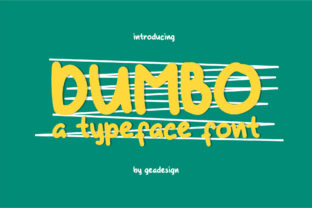
Dumbo Font: A Handwritten Charm for Every Project
Why Choose Dumbo?
There are several reasons why Dumbo has become a popular choice among designers and creators. One of the main attractions is its playful and whimsical style. The rounded letters and soft curves give it a gentle, almost childlike appearance that can evoke feelings of nostalgia and joy.
Another key factor is its versatility. While Dumbo may look best in smaller sizes, it can still be used effectively in larger formats when needed. This makes it suitable for a wide range of applications, from digital projects to print materials.
Additionally, Dumbo’s unique aesthetic can help differentiate your work from others. In a world where many fonts are similar, having a distinctive typeface like Dumbo can make your content more memorable and engaging.
Where Can You Use Dumbo?
Dumbo is incredibly versatile and can be applied in various contexts. Here are some common use cases:
- Personal Projects: Use Dumbo for invitations, thank-you notes, or social media posts to add a personal touch.
- Branding: Incorporate Dumbo into logos, packaging, or marketing materials to create a cohesive brand identity.
- Education: Teachers might use Dumbo for classroom displays, student projects, or interactive learning tools.
- Marketing: Marketers can leverage Dumbo to make promotional content more eye-catching and relatable.
- Freelancing: Freelancers and small business owners can use Dumbo to enhance their portfolios or client communications.
The font’s charm also extends to digital platforms. It works well in web design, email templates, and mobile apps, making it a great option for online content creation.
Practical Examples of Dumbo in Action
To better understand how Dumbo can be used, let’s look at some real-world examples:
Example 1: A local bakery uses Dumbo on their website and social media to create a cozy, welcoming vibe. The font helps convey the handmade quality of their products.
Example 2: A blogger incorporates Dumbo into their blog headers and call-to-action buttons. This adds a friendly tone to their content while keeping it professional.
Example 3: An educator creates a printable worksheet using Dumbo for the title and instructions. The font makes the material feel more approachable and less intimidating for students.
These examples show how Dumbo can be adapted to fit different needs and styles without losing its signature charm.
Important Considerations Before Using Dumbo
While Dumbo is a wonderful font, there are a few things to keep in mind before using it in your projects:
1. Readability: Although Dumbo is visually appealing, it may not always be the most readable font, especially at smaller sizes. Always test how it looks in different contexts.
2. Licensing: Make sure you have the proper license to use Dumbo in your project, whether it's for personal or commercial use.
3. Pairing with Other Fonts: Dumbo works best when paired with a contrasting font for body text. This ensures that your content remains clear and easy to read.
4. Context Matters: Not every project is suited for a handwritten font. Consider the tone and purpose of your work before choosing Dumbo.
Conclusion
Dumbo is more than just a font—it's a design element that adds personality and charm to any project. Whether you're a beginner or a seasoned designer, Dumbo offers a unique way to express creativity and connect with your audience. By understanding its strengths and limitations, you can use it effectively to enhance your work and make a lasting impression.